Packing Personal Care for One Overnight Stay
Packing personal care for one overnight stay is easier when you match familiar products to your schedule and leave out anything without a clear use.
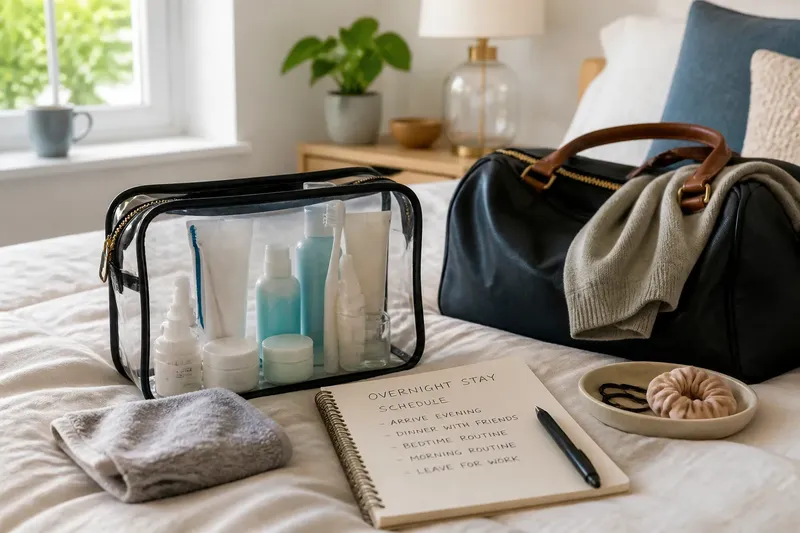
Packing personal care for one overnight stay works best when each item has a job in the schedule. Start with when you will arrive, what you will do before bed, and what you need before leaving; then pack familiar products for those moments rather than a miniature version of your bathroom shelf.
What should I pack for one night?
Pack the products you expect to use between arrival and departure, plus the tools needed to apply them. For many people, that means a toothbrush and toothpaste, face cleanser, moisturizer, deodorant, and any personal-care item that is part of a regular routine. Add hair care or makeup only if the schedule gives those products a clear use.
Think of the kit like a small place setting: include what the occasion calls for, not every item in the cupboard. The list changes if you will arrive after a shower, head straight to an event, or leave early. A product’s usual place in your routine does not automatically make it necessary for this particular stay.
- Before bed: Identify the cleansing and moisturizing products you normally use, if you expect to use them.
- On waking: Consider oral care, deodorant, face care, and any grooming needed before you leave.
- For planned activities: Add makeup, hair products, or other personal-care items only when the schedule calls for them.
- For personal needs: Include prescribed or otherwise essential items you rely on, following their directions.
How do I use my schedule to decide?
Write the stay as a short sequence of occasions, not a list of everything you might conceivably do. Note the setting, the time you expect to arrive, and whether you will have access to a bathroom or changing space. This reveals which products have an actual task and which are coming along out of habit.
Say you arrive at a friend’s home after dinner, sleep there, and leave for work in the morning. You might plan for evening cleansing, bedtime oral care, and a quick morning routine; a full styling kit has no clear role unless you already know you will use it before work. The useful result is a bag you can unpack without sorting through backup products.
For an overnight stay with an evening gathering, the sequence may be different. If you will apply makeup after arrival, pack the products you use for that look and the cleanser you rely on to remove it. If you will arrive ready and go straight to bed, there may be no reason to bring the makeup at all.
Should I choose travel sizes or familiar products?
Choose a familiar product in a manageable container when you can. A small amount of a product you already use is often a more sensible choice than a newly purchased travel size that may not suit your preferences. Travel-size packaging can be convenient, but the label and directions still matter; follow them, along with applicable travel rules.
If a product is available only in a large container, decide whether it is genuinely needed. You might use a suitable clean, leak-resistant container for a small amount if the product can be transferred and its directions allow it. Keep the product identifiable, and do not decant anything whose packaging or instructions make that unsuitable.
A single-use sachet can make sense when it is familiar, sealed, and enough for the intended use. It is less useful if it introduces a product you have never tried or leaves you with an awkward amount to store. For a one-night kit, predictability often matters more than having a separate miniature of every item.
What can I leave out?
Leave out anything with no planned occasion, anything that duplicates another item’s role, and anything included only because it lives in your regular routine. A second cleanser, several styling options, or a collection of makeup brushes can add clutter without solving a problem for this stay.
Check each proposed item with a simple question: when, specifically, will I use it? If you cannot name a moment, leave it at home. This is not a rule against optional comforts; it is a way to distinguish a deliberate choice from packing by reflex.
Also consider what the place you are staying already provides, without assuming it will have a particular brand or type of product. If a host has mentioned soap or a hair dryer, you may not need to pack your own, unless you prefer your usual item. Ask ahead if the answer affects something you rely on.
How should I keep the kit organized?
Put leak-prone containers in a sealed pouch and keep small items together so they do not disappear among clothes. A transparent toiletry bag can make contents easier to see; a soft pouch may fit more comfortably into a small bag. Choose based on how you will carry it and where you will set it down, rather than buying a special organizer for a single trip.
Keep items you will use first near the top. If you expect to wash your face as soon as you arrive, avoid burying the cleanser beneath products reserved for the next morning. Separating bedtime and morning items into two small groups can also help, provided it does not add extra packaging you do not need.
Before closing the bag, check that lids are secure and that any product likely to leak is protected from clothing. Keep essential personal items accessible rather than tucked into a pouch you may leave behind. Product-specific storage directions take priority over convenience.
What if I forget something?
Pause before replacing a forgotten item. Decide whether it is necessary for the next planned use, can be borrowed appropriately, or can simply wait until you get home. A missed optional hair product may not require a purchase; an essential item may call for a different plan.
If you need a substitute, choose one that is suitable for your needs rather than improvising with an unfamiliar product. For personal or medical concerns, follow professional advice and the product’s directions. For ordinary grooming, a simpler routine may be enough for one night.
Which questions help me pack personal care for one overnight stay?
Do I need a separate product for every routine step?
No. Bring only the products you expect to use for the routine you will actually follow. Skip duplicate options unless a specific need makes them useful.
Is it sensible to try a new product during an overnight stay?
It is usually easier to pack a product you already know suits your preferences. A short stay leaves little reason to introduce an unfamiliar item unless you have a clear need for it.
Should I pack makeup for just one night?
Pack it if you have a planned occasion or expect to use it before leaving. If you will arrive ready and have no plans to apply it again, leave the makeup kit at home.
What if my morning plans are uncertain?
Pack a small set of familiar basics that can serve the most likely plan, rather than several complete alternatives. If the schedule changes, decide then whether an additional item is worth finding or borrowing.
Packing personal care for one overnight stay becomes easier when the schedule, not the size of your bathroom shelf, sets the limits. Before you leave, look at each item and name its next use; if it has none, it can stay home. That final check keeps the kit compact while preserving the products that make the stay feel manageable.